
Rejected! 10 Commissioned Artworks That Went Spectacularly Wrong
Every commission begins with a handshake and a hope. The patron imagines one thing and the artist imagines another, and usually the two can be made to meet somewhere in the middle. Sometimes they can't. Then a painting gets taken down, a statue gets recarved or a mural is chipped off the wall.
What's odd is how often the rejected version is the one we remember. Below are ten commissions, in rough chronological order, that went badly wrong. In nearly every case, history ended up siding with the artist.
Paolo Veronese, The Last Supper that became a party (1573)

The Dominican friars of Santi Giovanni e Paolo in Venice needed a new picture for their refectory after a fire in 1571 destroyed the Titian that had hung there. Veronese gave them a vast, glittering banquet, more than thirteen metres wide, full of architecture, servants, animals and guests in rich costume. A few months later the Inquisition called him in. The tribunal wanted to know what buffoons, drunken Germans and dwarfs were doing at Christ's final meal, and gave him three months to fix it.
Veronese's answer was ingenious. He hardly changed a figure. He changed the title, and with a new inscription the scene became The Feast in the House of Levi, a different Gospel dinner where a rowdier crowd was easier to excuse. The painting now hangs in the Gallerie dell'Accademia, as crowded and cheerful as ever.
Caravaggio, Death of the Virgin (c. 1601–06)
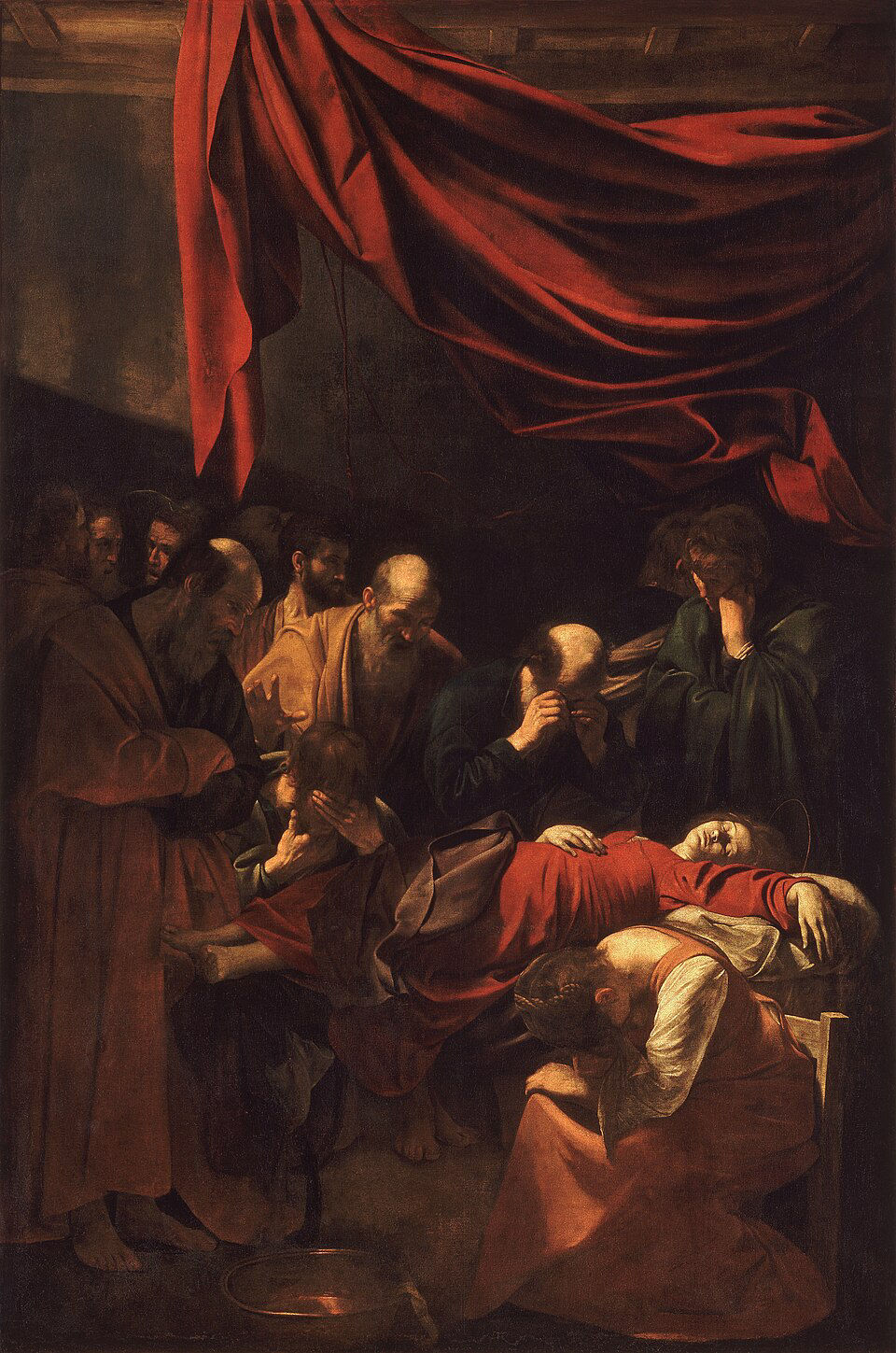
The papal lawyer Laerzio Cherubini commissioned an altarpiece for his chapel in Santa Maria della Scala, a Carmelite church in Rome's Trastevere. Caravaggio painted the Virgin as a dead woman and nothing grander: her body is swollen, her feet are bare and she lies under a heavy red curtain. Early writers said he had used a courtesan as his model. The church refused the picture and replaced it with a work by Carlo Saraceni, one of his followers.
The rejection didn't last long. Peter Paul Rubens, then working for the Duke of Mantua, urged his employer to buy it, and in 1607 the painting was put on show in Rome for a few days before it left for Mantua. After passing through the collection of Charles I of England, it was bought by Louis XIV, and today it hangs in the Louvre.
Rembrandt, The Conspiracy of Claudius Civilis (1661–62)

Amsterdam's grand new town hall on the Dam needed a cycle of paintings about the Batavian revolt against Rome. The job had gone to Govert Flinck, who died in 1660 before finishing anything, and part of it was handed to Rembrandt. He produced a canvas about five metres square, the largest he ever painted: a midnight oath sworn around a glowing table, led by a one-eyed chieftain.
It went up in 1662 and was gone within months. No document explains why, though its rough finish and unheroic mood are the usual suspects. Rembrandt cut the canvas down to roughly a quarter of its size, probably to make it sellable. That surviving fragment, still striking at almost two by three metres, is now in the Nationalmuseum in Stockholm.
Gian Lorenzo Bernini, Equestrian Statue of Louis XIV (completed 1684)

Bernini spent years on a marble statue of the Sun King on a rearing horse. It reached Versailles in October 1685, after Bernini himself had died. When Louis saw it that November, he hated it so much that he reportedly thought about having it destroyed.
The court sculptor François Girardon came up with a solution instead. He recarved the face, put a crested helmet on the head and turned the banners beneath the horse into flames. Louis XIV became Marcus Curtius, the Roman hero who rode into a chasm to save his city. The statue was sent to the far end of the Pièce d'eau des Suisses, about as far from the palace as the gardens allowed.
James McNeill Whistler, The Peacock Room (1876–77)

The shipping magnate Frederick Leyland asked for some minor touches to the dining room at 49 Prince's Gate in London, which had been designed to show off his blue-and-white porcelain. While Leyland was away, Whistler covered almost every surface in blue and gold peacocks. He believed the work was worth 2,000 guineas, and Leyland refused to pay that sum.
Whistler had the last word on the wall itself. He painted two peacocks squaring off, one of them standing for his stingy patron, and called the mural Art and Money; or, The Story of the Room. In 1904 the American collector Charles Lang Freer bought the entire room, and it is now in the Freer Gallery of Art in Washington, D.C.
Auguste Rodin, Monument to Balzac (1891–98)

The Société des Gens de Lettres asked Rodin in 1891 for a monument to Honoré de Balzac. Seven years and more than fifty studies later, he showed a full-size plaster at the 1898 Salon: a towering figure wrapped in a dressing gown, with a head that seems to rise out of a block of rough stone. Critics called it a snowman, a sack, a menhir. The Société turned it down.
Rodin took the plaster home to Meudon and never sold it. It was cast in bronze only in 1939, more than twenty years after his death, and installed where Boulevard du Montparnasse meets Boulevard Raspail. Today it is often called the first truly modern monument.
Jacob Epstein, the Strand statues (1908)

For the British Medical Association's new headquarters on the Strand, designed by Charles Holden, the young Jacob Epstein carved a series of nude figures about the stages of human life. When the hoardings came down in 1908, the Evening Standard was appalled, and Edwardian London argued about them for weeks.
The real damage came later. In 1937, after the building had passed to the government of Southern Rhodesia, a piece fell off one figure while decorations for the coronation were being taken down. The new owners cited safety and had the statues hacked back. Epstein suspected that safety was only a pretext. The weathered stumps can still be seen high above the Strand on what is now the Zimbabwean embassy.
Diego Rivera, Man at the Crossroads (1933)

The Rockefellers hired Rivera to paint the lobby of their new RCA Building, and he arrived in New York in March 1933. As the mural grew, a portrait of Lenin appeared in it. Nelson Rockefeller asked him to paint it out, and Rivera refused, offering to add Abraham Lincoln instead. He wrote that he would prefer "the physical destruction of the conception in its entirety."
He got his wish. Work was stopped in May 1933 and the wall was covered, although Rivera was paid his full fee. In February 1934 workers removed the mural altogether. Rivera then painted a smaller version, Man, Controller of the Universe, at the Palacio de Bellas Artes in Mexico City, where it can still be seen.
Mark Rothko, The Seagram Murals (1958–59)

Rothko took a commission to paint murals for the Four Seasons restaurant in New York's new Seagram Building, and he worked on them for two years in deep maroons and blacks. He said he wanted diners to feel "trapped in a room where all the doors and windows are bricked up."
After eating at the restaurant himself, he decided he wanted nothing to do with it. He returned the $35,000 fee and kept the paintings. Years later he gave nine of them to the Tate in London, partly because he admired J.M.W. Turner. They arrived on 25 February 1970, the day Rothko died in his New York studio.
Richard Serra, Tilted Arc (1981–89)
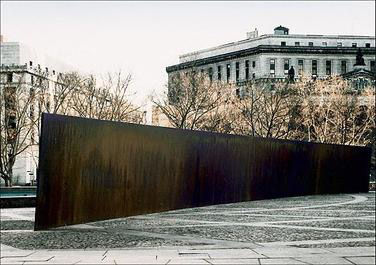
The U.S. government's Art-in-Architecture programme commissioned Serra to make a work for Federal Plaza in Manhattan. He gave them a wall of weathering steel, 120 feet long and 12 feet high, curving across the square. Office workers complained that it blocked their way, their view and the sun.
A 1985 public hearing drew more speakers in favour of keeping it than against, but the decision still went against it. Serra argued that the piece belonged to its site and could not be moved: "To remove the work is to destroy the work." On 15 March 1989 it was cut into three pieces and taken away, and it has stayed in storage since.
The Afterlife of a "No"
What links these ten stories is how short the rejections turned out to be. The paintings found new owners, the plasters were cast in bronze, and the mutilated statues still look down on passers-by. A patron can refuse a work, but it's much harder to make people forget it. Several of these "failures" now stand among their makers' best-loved works, and they make a good reminder that art is never quite finished when the bill is paid.


