
When Did Landscape Painting Begin?
- Feb 4
- 3 min read
Landscape painting is a genre in which nature itself becomes the primary subject of the artwork. However, this understanding emerged relatively late in art history. In antiquity, representations of nature did exist; Roman villa frescoes, for example, often depicted gardens, mountains, and architectural vistas. Yet these scenes typically served as backgrounds for mythological narratives or architectural illusions rather than as independent subjects. For centuries, landscape functioned mainly as a supporting element, not the focus.
Throughout the Middle Ages in Europe, landscape remained secondary. Religious storytelling dominated artistic production, and nature was rendered in a symbolic and stylized manner, subordinated to human figures and spiritual meaning. The true emergence of landscape painting became possible during the Renaissance, when advances in linear perspective and a renewed interest in direct observation of the natural world transformed artistic practice.
The Renaissance: From Background to Stage
During the fifteenth and sixteenth centuries, Renaissance artists began to depict nature with increasing realism. Leonardo da Vinci’s background landscapes, shaped by atmospheric perspective and subtle light effects, demonstrate a deep engagement with natural observation. Albrecht Dürer’s watercolors and drawings, on the other hand, treated nature as an independent subject of study, marking an important step toward the autonomy of landscape as a genre.

Although landscape during this period often remained part of figurative compositions, nature was no longer merely decorative; it became a means of creating mood, spatial depth, and emotional resonance.
The Seventeenth Century: The Golden Age of Landscape
Landscape painting truly became an independent genre in the seventeenth century, particularly during the Dutch Golden Age. Artists of this period depicted everyday environments and natural surroundings without the need for religious or mythological justification.
Jacob van Ruisdael revealed the emotional power of landscape through dramatic skies and expansive natural views. Meindert Hobbema is known for his rural roads and forest scenes, while Aelbert Cuyp created luminous pastoral landscapes through his masterful use of light and atmosphere. In France, Claude Lorrain and Nicolas Poussin developed the tradition of the “classical landscape,” characterized by idealized compositions grounded in order, harmony, and classical ideals.

Romanticism: The Sublime Power of Nature
At the turn of the late eighteenth and early nineteenth centuries, Romanticism introduced a deeply emotional and philosophical dimension to landscape painting. Artists viewed nature as a space that emphasized human fragility in the face of vastness and the sublime.
Caspar David Friedrich’s misty mountains, solitary figures, and compositions evoking infinity stand among the most powerful examples of landscape as an inner, spiritual experience. In England, J.M.W. Turner explored the force and volatility of nature through light and color; his storms, seas, and atmospheric effects pushed landscape painting to the edge of abstraction.

Realism and Impressionism: Landscape Through Observation
By the mid-nineteenth century, Realism rejected idealization in favor of direct observation. Gustave Courbet portrayed nature as raw, physical, and materially present.
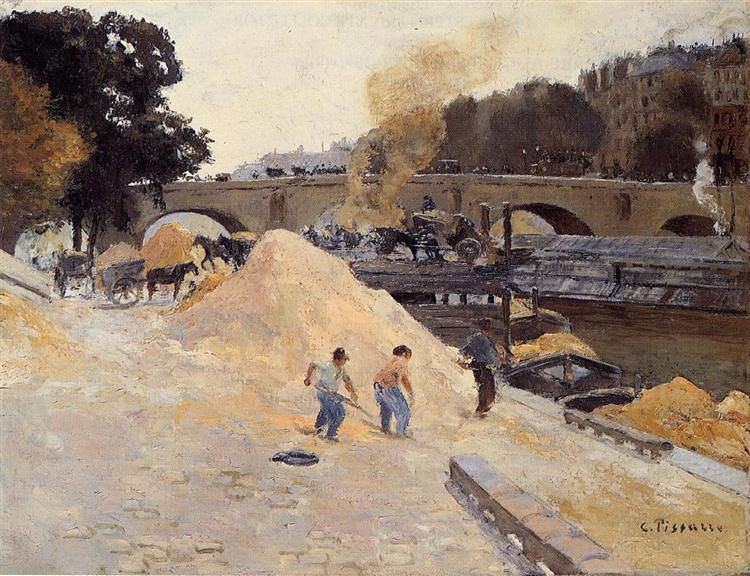
The Impressionists revolutionized landscape painting by focusing on fleeting moments and changing light conditions. Claude Monet, Camille Pissarro, and Alfred Sisley painted outdoors, capturing nature as an ever-shifting visual experience. Monet’s repeated studies of the same motif at different times of day demonstrated that landscape is not static, but constantly transformed by light and perception.
Modern and Contemporary Approaches
In the twentieth century, landscape painting underwent profound formal and conceptual transformations. Paul Cézanne restructured nature through geometric forms, laying the groundwork for modern art. Vincent van Gogh turned landscape into an intense expression of personal emotion and inner turmoil.

Today, landscape is no longer limited to the depiction of nature alone; it encompasses themes such as ecology, memory, identity, and the human relationship with the environment. With the expansion of photography, video, and digital media, the concept of landscape continues to be redefined.

Over the course of history, landscape painting has evolved from a decorative backdrop into an autonomous and powerful mode of artistic expression. Through Renaissance observation, seventeenth-century genre formation, Romantic emotional depth, and modern formal experimentation, landscape has become a means of reflecting not only the external world but also humanity’s inner experience of it. For this reason, landscape painting remains one of the most enduring and vital genres in the history of art.


