
Grief, Resilience, and Paint: Livia Westcott-Lahar
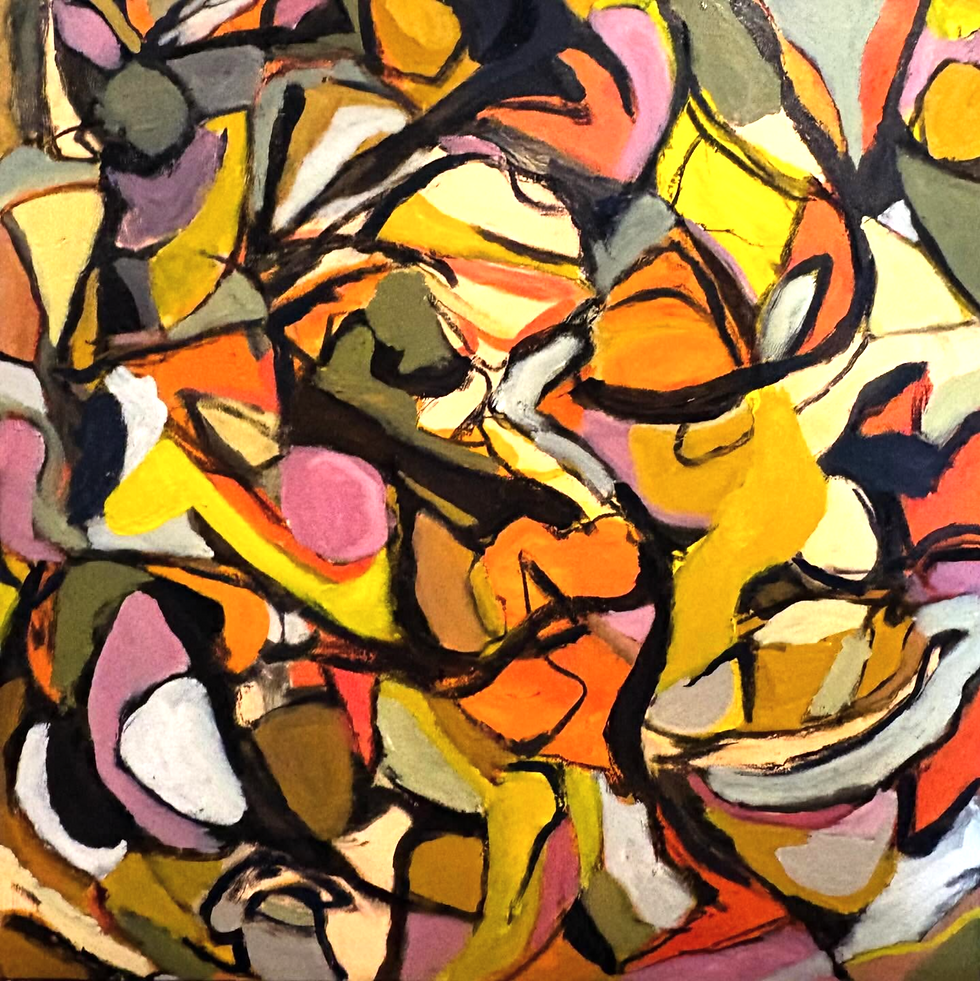
Born and raised in San Francisco, artist Livia Westcott-Lahar creates deeply emotional abstract paintings shaped by resilience, memory, and personal transformation. Working primarily with acrylic and charcoal, her expressive surfaces balance raw gesture with moments of tenderness, reflecting both grief and renewal.
Influenced by painters such as Frank Auerbach, Lucian Freud, Chaïm Soutine, and abstract expressionists like Joan Mitchell and Lee Krasner, Westcott-Lahar approaches painting as an instinctive and cathartic act. In this interview, she speaks about loss, intuition, abstraction, and the emotional force that drives her practice forward every day.

Thank you for accepting our interview invitation Livia. Can you tell us a bit about your background and how you became an artist?
Born in 1993, I was born and raised in San Francisco. I feel like I’ve been an artist my whole life dating back to preschool and pipe cleaners. I enrolled at SFAI in 2018 where I developed a real love for painting. Then the pandemic hit and the institution went under so I continued my studies at Massachusetts College of art and design in 2021 graduating with my BFA in 2023. I’ve been painting every day since starting at SFAI. My practice is what grounds me.
How would you describe yourself outside of your work as an artist?
I have dealt with a lot of physical and emotional challenges particularly in the last fifteen years, so I have had to pull myself up from my bootstraps. I am full of fire and grit, I set my mind to something, and I get it done. I have a hugely supportive boyfriend and w have a dog who drives us nuts, but we love him. I am grateful for all I’ve been given.
Were there any key moments or influences that shaped your artistic journey?
Absolutely, the loss of my sister when I was seventeen (she was twenty) and more recently less than a year ago the loss of my mom. Both losses were sudden and tragic. I wasn’t yet a painter in full force when we lost my sister but the first several years, I believe were processing the loss. Certainly now, my mom is never far from my thoughts as I paint.

What inspires you on a daily basis?
I think I am most inspired by feelings. I refer to it as an informed intuition to getting into that flow state, being aware of the body and the catharsis taking over.
What does abstraction mean to you personally?
It means the ability to communicate a feeling through shapes, line, and color, leaving a bit more room for the viewer to have their own reaction.
Do your works start with a concept, emotion, or purely spontaneous creation?
Some days it’s spontaneous but more so recently it’s been about emotions, as I continue to process the loss of my mom.

How do you decide when a piece is finished?
When a piece surprises me.
How important is emotion in your paintings?
Hugely, whether the intended emotion felt by the viewer or not, it’s the emotional roller coaster of feeling. Grief and joy. Things to be grateful for and things to feel angry about. I love making the ugly beautiful. I have always been a positive person.
Do you think abstract art should be understood, or simply felt?
I prefer that they’re felt. I don’t believe that they need to be so analyzed that they need to be “understood” but that’s left up to the viewer.

Are there artists, movements, or experiences that influence your work?
Frank Auerbach was the first artist who made me want to be a painter. I appreciate Lucian Freud, ChaÏm Soutine. The impasto application has always appealed to me. Then there are the women like Gwen John and Celia Paul. And then there are the abstract expressionists, the women of ninth street in the 1950’s. including but not limited to Lee Krasner, Grace Hartigan and of course Joan Mitchell.
Does music, literature, or other art forms play a role in your creations?
I am always reading about artists. I just read a memoir by Philip Guston’s daughter and now I am reading a book on Van Gogh. I am a sponge so yes whatever I take in appears sometimes in unexpected ways in my work.
How does your environment affect your art?
I have a studio at home and it’s very comfortable. I usually listen to music to get things flowing then once brush hits canvas it’s off to the races and my world melts away. Sometimes music continues to play sometimes I paint in silence.
What materials and techniques do you prefer to use, and why?
I have always worked in acrylic at first for health reasons and I fell in love with the medium, so I have never touched oil. Especially having a studio at home, it’s important to not have the toxicity that comes with oil. A few months ago, I started using charcoal along with the acrylic and I just love how it allows me to draw and paint. The charcoal allows me to be gestural in a wonderful new way and it works beautifully with the acrylic.

How important is color in your work?
A palette is one of the first things that I decide when I start a painting. I love mixing colors, even though I usually know what I’m going to get often I am pleasantly surprised.

How do you see the role of abstract art in contemporary culture?
I think that abstract art is pushing through and getting more attention. For so long, realism was on the rise and while it remains prevalent and undoubtedly always will, there’s a different attention given to abstract work. There’s a freedom at play. There is more room for different viewpoints.
If you had to describe your art in one sentence, what would you say?
With great pain comes great resilience and my paintings are proof of my commitment to my life, riding the waves as they come.

As our conversation with Livia Westcott-Lahar comes to a close, what remains most striking is the honesty and emotional intensity that runs through both her words and her paintings. Her work transforms grief, memory, and resilience into something deeply human — paintings that do not seek simple explanations, but genuine emotional connection. Through gesture, texture, and color, Westcott-Lahar reminds us that abstraction can become a powerful language for healing and survival. We would like to thank her once again for sharing her story and artistic vision with Squint Magazine, and we look forward to following the continuing evolution of her practice.


