Beginning Digital Art: A New Canvas for Contemporary Creativity
Updated: Mar 22
Digital art has become one of the most dynamic and accessible forms of artistic expression in the 21st century. Thanks to modern technology, artists are no longer limited to traditional materials such as canvas, paint, or charcoal. Instead, a tablet, a computer, and the right software can open the door to an endless creative universe. For beginners, starting digital art may seem intimidating at first, but with the right approach and tools, the process can be both exciting and rewarding.

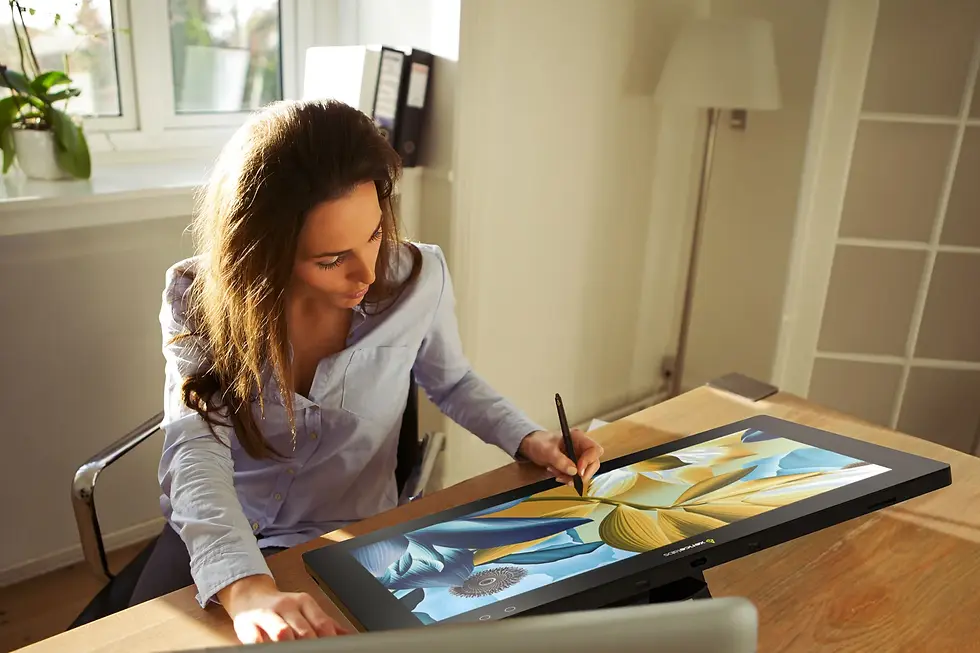
The first step in digital art is choosing the right equipment. While a powerful computer can be helpful, it is not always necessary in the beginning. Many artists start with a basic drawing tablet that connects to a computer, allowing them to draw directly into digital software. Tablets with screens, such as those that allow you to draw directly on the display, can feel more natural, but they are usually more expensive. Even a standard tablet without a screen can produce professional-quality artwork once the artist becomes familiar with it.
Equally important is selecting the right software. Programs like Adobe Photoshop, Procreate, and Clip Studio Paint are among the most popular tools used by digital artists today. Each program offers different brushes, textures, and layer systems that mimic traditional art techniques while also introducing entirely new creative possibilities. Beginners should experiment with different programs to discover which interface and tools suit their artistic style best.
Learning the fundamentals of drawing remains just as important in digital art as it is in traditional art. Concepts such as composition, anatomy, perspective, light, and color theory form the backbone of strong artwork regardless of the medium. Digital tools can enhance creativity, but they cannot replace the importance of these core artistic principles. Practicing sketches regularly, studying reference images, and analyzing the work of other artists are essential habits for growth.
One of the biggest advantages of digital art is flexibility. Mistakes can be undone instantly, layers allow artists to separate elements of a composition, and color adjustments can be made without permanently altering the image. These features encourage experimentation and reduce the fear of making mistakes, which is particularly helpful for beginners who are still exploring their style.
Another key step for new digital artists is building a habit of consistent practice and sharing their work. Platforms such as Instagram, ArtStation, and Behance allow artists to showcase their work, receive feedback, and connect with creative communities around the world. Observing how other artists approach digital painting, illustration, or concept art can be incredibly inspiring and educational.
Ultimately, starting digital art is less about having the most advanced equipment and more about curiosity, patience, and dedication. Every digital artist begins with simple sketches and gradually develops their own techniques and visual language. By combining traditional artistic fundamentals with modern digital tools, artists can create works that are both innovative and deeply personal.
In the end, digital art is not merely a technological shift in the art world; it is a new form of storytelling. For those willing to experiment and practice, the digital canvas offers limitless possibilities to explore imagination, identity, and creativity.