
The Horse as Symbol: Strength and Meaning in Art History
Updated: Apr 8
Horses have held a central place in art history as one of the oldest and most powerful symbols of human civilization. They have represented strength and freedom while also serving as essential elements in depictions of war, power, mythology, and everyday life. Beyond being an aesthetic form, the image of the horse has functioned as a strong visual language carrying cultural and political meanings.
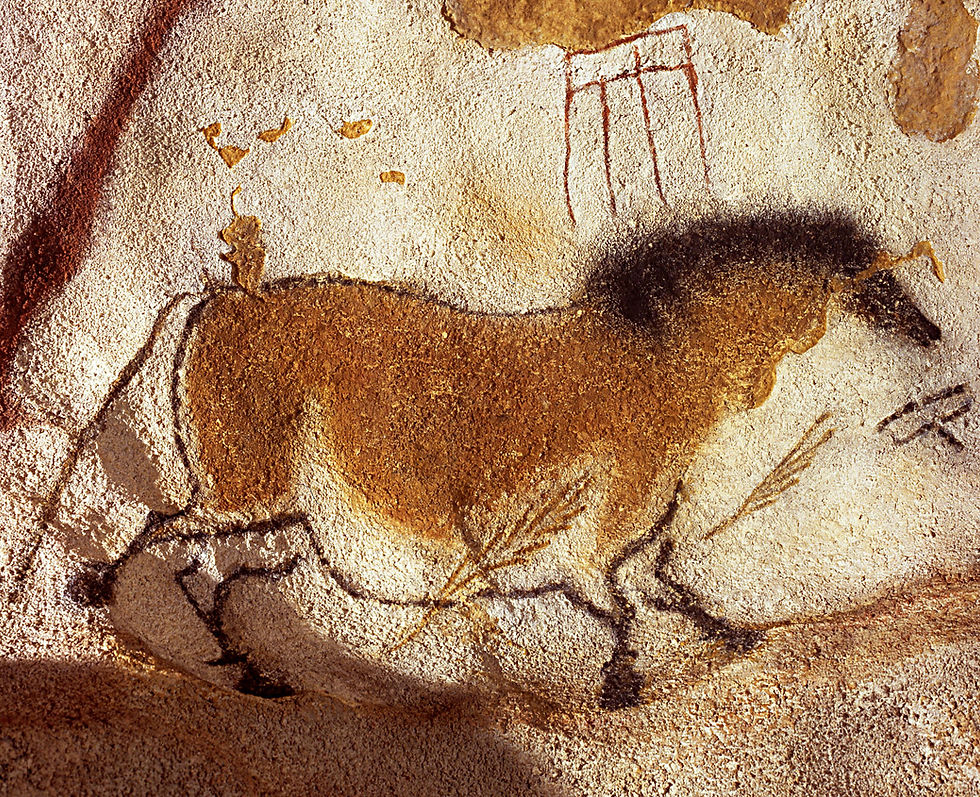
The earliest representations of horses appear in prehistoric cave paintings. In particular, the Paleolithic paintings in the Lascaux Cave reveal the importance of horses in the human imagination. In these depictions, horses appear as animals of the hunt, but they also symbolize movement and the rhythm of nature. Artists demonstrated remarkable observational skill in capturing the muscular structure and dynamism of these animals.
In antiquity, the horse became a symbol of power and victory. In ancient Greek and Roman art, equestrian statues were often used to glorify rulers and military leaders. The Equestrian Statue of Marcus Aurelius, from the Roman period, is one of the most important examples of this tradition. In this sculpture, the horse represents authority and control, while its calm yet powerful stance reinforces the dominance of the emperor.

During the Middle Ages, the horse was closely associated with knighthood and religious narratives, symbolizing warfare and nobility. In the Renaissance, advances in anatomical knowledge and perspective led to more realistic and scientific representations of horses. Leonardo da Vinci, for example, produced detailed anatomical studies and movement analyses of horses, contributing significantly to both art and science.
In the Baroque and Romantic periods, horses became central elements in dramatic compositions. In battle scenes and historical paintings, the movement of the horse added energy, tension, and emotional intensity. In the 19th century, artists such as Théodore Géricault portrayed horses with deep emotional sensitivity, emphasizing their power, vulnerability, and expressive potential. The horse was no longer merely a vehicle, but a subject in its own right.

In modern art, the horse acquired new symbolic meanings. In Pablo Picasso’s masterpiece Guernica (1937), the horse stands at the center of the composition as a symbol of suffering and chaos caused by war. Its anguished form represents the broader tragedy of humanity. In this context, the horse became not only a physical presence but also a powerful political and symbolic device.
In conclusion, horses in art history have been far more than aesthetic subjects. They have served as complex symbols representing strength, freedom, nobility, tragedy, and the relationship between humans and nature. From prehistoric caves to modern masterpieces, the image of the horse has remained a powerful tool through which artists express both technical mastery and evolving human consciousness.
(Horse in a Landscape (Franz Marc), Horse Frightened by a Thunderstorm (Eugène Delacroix), Two Riders on the Beach (Max Liebermann)


